Spider silk has captivated scientists for decades, but its water-harvesting capabilities are revolutionizing how we think about condensation and droplet manipulation in modern technology. 🕷️

In a world where water scarcity affects billions and energy efficiency becomes increasingly critical, nature offers unexpected solutions. The humble spider’s web, glistening with morning dew, represents far more than an aesthetic wonder—it’s a masterclass in fluid dynamics and material engineering. Researchers worldwide are now decoding the microscopic architecture of spider silk to develop breakthrough technologies for water collection, heat transfer, and microscale transport systems that could transform industries from agriculture to aerospace.
The intersection of biomimicry and nanotechnology has opened unprecedented opportunities for innovation. By understanding how spiders manipulate water droplets with remarkable precision, engineers are creating synthetic materials that replicate these natural mechanisms, potentially solving some of humanity’s most pressing challenges related to resource management and sustainable technology.
🔬 The Microscopic Marvel: Understanding Spider Silk’s Water-Gathering Architecture
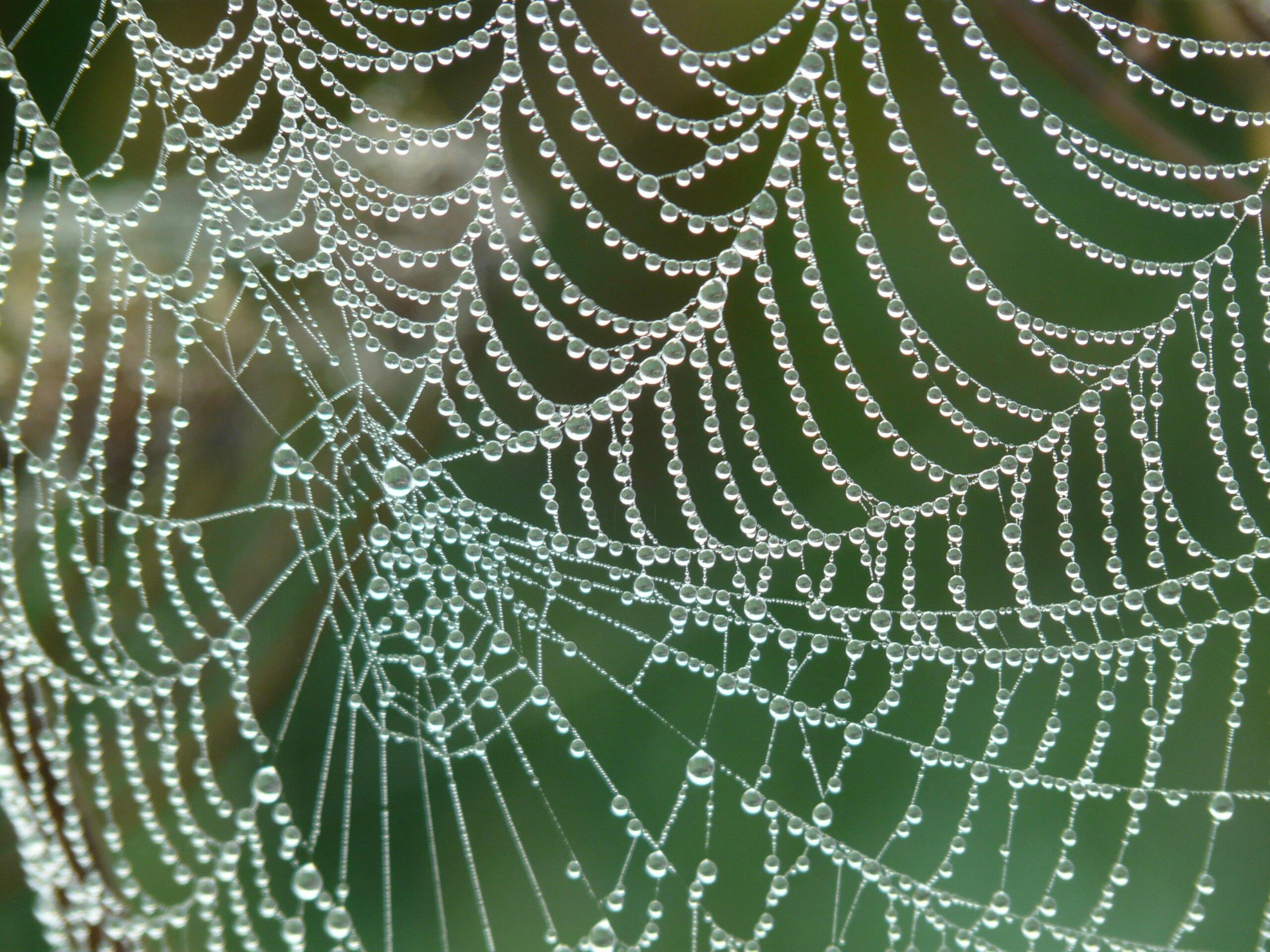
Spider silk possesses a unique structural design that makes it exceptionally effective at collecting and transporting water droplets. Unlike uniform fibers, spider silk features periodic spindle-knots connected by joints, creating a distinctive beaded appearance when wet. This isn’t merely decorative—it’s functional engineering at the nanoscale.
The surface chemistry of spider silk plays an equally crucial role. The silk exhibits gradient wettability, meaning different sections of the fiber have varying degrees of water attraction. The spindle-knots are more hydrophilic (water-attracting), while the joints between them are more hydrophobic (water-repelling). This contrast creates a chemical gradient that drives droplet movement along the fiber.
When water condenses on spider silk, it doesn’t simply sit stationary. The combination of structural gradients (changing fiber thickness) and chemical gradients (varying surface energy) creates a directional transport system. Tiny water droplets are spontaneously driven from the thinner joints toward the thicker spindle-knots, where they coalesce into larger drops that eventually become heavy enough to fall or be collected.
The Physics Behind Directional Droplet Movement
The phenomenon governing this remarkable behavior is rooted in the Laplace pressure difference. Smaller droplets on thinner sections of fiber experience higher internal pressure than larger droplets on thicker sections. This pressure differential generates a net force that propels droplets toward regions of larger curvature—the spindle-knots.
Additionally, surface energy gradients contribute to what scientists call the “wettability gradient effect.” Water naturally moves from hydrophobic (low-energy) surfaces toward hydrophilic (high-energy) surfaces. The spider silk’s periodic variation in surface chemistry amplifies this effect, creating an efficient, passive transport system requiring no external energy input.
💧 From Webs to Watersheds: Applications in Water Collection Technology
The global water crisis affects over two billion people who lack access to safely managed drinking water. Traditional water collection methods often require significant energy inputs or complex infrastructure. Spider silk-inspired technologies offer a passive, low-energy alternative that could be deployed in water-scarce regions.
Researchers have developed artificial fibers that mimic spider silk’s hierarchical structure. These synthetic materials can be manufactured from polymers, creating fog-harvesting nets that are significantly more efficient than conventional mesh designs. When deployed in coastal or mountainous regions where fog is prevalent, these biomimetic nets can collect several liters of water per square meter daily.
The efficiency gains are substantial. Conventional fog nets capture water primarily through simple interception, relying on gravity to channel collected water downward. Spider silk-inspired designs add an active transport mechanism—droplets move horizontally along fibers toward collection points, dramatically increasing yield. Field tests in arid regions of Chile and Morocco have demonstrated water collection improvements of 200-300% compared to traditional fog nets.
Atmospheric Water Generation Systems
Beyond fog harvesting, spider silk principles are being integrated into atmospheric water generators (AWGs). These devices extract moisture directly from air through condensation. Traditional AWG systems struggle with efficiency because condensed droplets often block condensing surfaces, reducing heat transfer and collection rates.
Incorporating spider silk-inspired surface patterns on condensing plates enables rapid droplet removal. As water condenses, the directional transport mechanisms inherent in the biomimetic surface design quickly move droplets away from active condensing areas, maintaining optimal heat transfer and maximizing water collection efficiency. This innovation could make AWG technology viable for household and community-scale applications in water-stressed environments.
🌡️ Revolutionary Heat Transfer: Cooling Systems Reimagined
Efficient heat dissipation is critical in countless applications, from electronics manufacturing to industrial processing. Traditional cooling systems often rely on energy-intensive active mechanisms—fans, pumps, and refrigeration cycles. Spider silk-inspired condensation offers a passive alternative that could revolutionize thermal management.
In condensation-based cooling systems, heat transfer efficiency depends heavily on how quickly condensed droplets can be removed from cooling surfaces. Droplets that linger on surfaces act as thermal insulators, reducing heat transfer rates. This phenomenon, called “droplet flooding,” significantly limits the performance of conventional condensing heat exchangers.
By engineering cooling surfaces with spider silk-inspired microstructures, researchers have achieved remarkable improvements in heat transfer coefficients. The biomimetic surfaces facilitate rapid droplet coalescence and directional transport, preventing flooding and maintaining optimal condensation conditions. Laboratory studies have documented heat transfer enhancements exceeding 50% compared to conventional smooth or uniformly textured surfaces.
Applications in Electronics Cooling
The electronics industry faces mounting challenges as devices become more powerful and compact. High-performance processors, graphics cards, and power electronics generate intense heat in small spaces. Inadequate cooling leads to thermal throttling, reduced performance, and shortened component lifespans.
Spider silk-inspired heat pipes and vapor chambers represent a promising solution. These passive cooling devices rely on evaporation and condensation cycles to transfer heat efficiently. By incorporating biomimetic condensing surfaces, next-generation heat pipes can achieve significantly higher thermal conductivity, enabling more powerful electronics in smaller form factors.
Several technology companies are already exploring commercial applications. Prototypes of smartphones and laptops incorporating spider silk-inspired cooling systems have demonstrated improved sustained performance during demanding tasks while maintaining thinner profiles and reducing fan noise.
🔬 Microfluidics and Lab-on-a-Chip Technologies
Precise manipulation of tiny liquid volumes is essential in modern biotechnology, medical diagnostics, and chemical analysis. Microfluidic devices—often called “labs-on-a-chip”—perform complex laboratory procedures on miniaturized platforms, reducing costs and enabling point-of-care diagnostics.
Controlling droplet movement at microscale presents significant challenges. Traditional microfluidic systems typically require external pumps, valves, and power sources, adding complexity and cost. Spider silk-inspired surfaces offer an elegant alternative—passive, self-powered droplet transport driven entirely by surface energy gradients.
Researchers have fabricated microfluidic channels with engineered wettability gradients that mimic spider silk’s chemical and structural features. These channels can spontaneously move droplets containing biological samples, reagents, or diagnostic markers without any external energy input. The technology enables simplified device designs that are more affordable and accessible, particularly valuable for resource-limited healthcare settings.
Advancing Diagnostic Capabilities
Point-of-care diagnostic devices powered by spider silk-inspired microfluidics could transform global health. Imagine a simple card-based test that requires no electricity or battery power, yet can perform multiple diagnostic assays simultaneously by intelligently routing tiny sample droplets through various detection zones.
Such devices are moving from laboratory prototypes toward clinical reality. Applications under development include rapid infectious disease testing, blood glucose monitoring, and water quality assessment. The passive droplet transport mechanism ensures consistent, reliable performance even in challenging field conditions where conventional electronic devices might fail.
🏭 Industrial Applications: From Coatings to Manufacturing
The principles underlying spider silk’s water-handling capabilities extend far beyond water collection and cooling. Industries ranging from aerospace to food processing are finding innovative applications for biomimetic surfaces that control condensation and manage liquid transport.
In aerospace engineering, ice formation on aircraft surfaces poses serious safety risks. Anti-icing coatings inspired by spider silk can promote rapid water removal, reducing ice accumulation. By creating surfaces that encourage condensed moisture to coalesce and shed quickly, these coatings could reduce reliance on energy-intensive de-icing systems and improve aircraft safety.
The food processing industry faces constant challenges with condensation in refrigerated environments. Water droplets that form on chilled surfaces can drip onto products, compromising food safety and shelf life. Spider silk-inspired ceiling and wall coatings in refrigerated warehouses and processing facilities can direct condensation toward designated drainage areas, maintaining cleaner, safer environments.
Self-Cleaning and Anti-Fouling Surfaces
Condensation management intersects with another valuable property—self-cleaning. Surfaces designed with spider silk-inspired microstructures not only transport water droplets efficiently but also use those droplets to carry away contaminants. As droplets coalesce and move along the surface, they pick up dust, bacteria, and other particles, effectively cleaning the surface without chemical cleaners or manual intervention.
This self-cleaning capability has exciting applications in solar panels, architectural glass, and medical equipment. Solar panels accumulate dust that reduces efficiency, typically requiring regular cleaning. Biomimetic coatings that use morning dew to self-clean could maintain panel efficiency while reducing maintenance costs and water consumption—a particularly valuable feature in arid regions where solar energy potential is highest but water for cleaning is scarce.
🌱 Sustainability and Environmental Impact
As global attention intensifies on sustainable technologies, spider silk-inspired innovations offer compelling environmental benefits. These passive systems require minimal energy input, reduce reliance on chemical treatments, and enable resource recovery in previously unviable scenarios.
Consider the water-energy nexus: traditional water treatment and distribution systems consume enormous amounts of energy. Passive water collection technologies inspired by spider silk could supplement conventional supplies, reducing energy consumption and carbon emissions while enhancing water security.
Similarly, improving heat transfer efficiency in industrial processes has cascading environmental benefits. More efficient heat exchangers mean less energy required for cooling, reducing fossil fuel consumption and greenhouse gas emissions. When scaled across industries, even modest efficiency improvements translate to significant environmental impact.
Biomimicry as a Design Philosophy
Spider silk research exemplifies biomimicry’s broader potential—looking to nature’s 3.8 billion years of evolutionary problem-solving for sustainable technological solutions. Nature operates under strict constraints: limited energy, renewable materials, and closed-loop systems. Technologies inspired by natural designs tend to inherently align with sustainability principles.
This design philosophy is gaining traction across industries. By studying how organisms efficiently manage resources and energy, engineers are developing technologies that work with natural processes rather than against them, creating solutions that are both high-performing and environmentally responsible.
🔭 Future Horizons: Emerging Research and Possibilities
The field of spider silk-inspired condensation technology continues to evolve rapidly. Current research explores increasingly sophisticated designs that combine multiple natural inspirations, creating hybrid biomimetic materials with enhanced capabilities.
Researchers are investigating dynamic surfaces that can actively adjust their properties in response to environmental conditions. Imagine a material that becomes more hydrophilic when humidity increases, maximizing water collection during optimal conditions, then switches to hydrophobic to facilitate droplet shedding when collection should pause.
Nanotechnology advances enable ever-more-precise fabrication of biomimetic structures. Techniques like electron-beam lithography and advanced polymer chemistry allow scientists to recreate spider silk’s hierarchical architecture at multiple scales simultaneously, from nanometer-level surface features to millimeter-scale fiber patterns.
Integration with Smart Materials and IoT
The convergence of biomimetic surfaces with smart materials and Internet of Things (IoT) technologies opens intriguing possibilities. Sensors embedded in spider silk-inspired water collection systems could monitor performance in real-time, optimizing operation based on weather conditions and demand patterns.
In agriculture, smart irrigation systems incorporating biomimetic condensation collectors could harvest atmospheric moisture while sensors monitor soil conditions, creating closed-loop water management systems that maximize efficiency and minimize waste. Such integrated approaches could transform farming in water-scarce regions.
🎯 Overcoming Challenges and Scaling Production
Despite tremendous promise, spider silk-inspired technologies face hurdles before achieving widespread commercialization. Manufacturing biomimetic surfaces with the required precision at industrial scales remains challenging and costly. Current production methods often rely on specialized equipment and processes unsuitable for mass manufacturing.
Researchers are working to develop scalable fabrication techniques. Roll-to-roll processing, where materials are manufactured on continuous rolls similar to printing, shows promise for producing biomimetic fibers and films economically. Chemical etching and self-assembly methods that create appropriate surface structures through controlled reactions rather than mechanical patterning could dramatically reduce production costs.
Durability presents another challenge. Natural spider silk maintains its properties through continuous biological renewal, but synthetic analogues must withstand environmental exposure, mechanical wear, and chemical degradation over extended periods. Developing materials that replicate spider silk’s functionality while offering superior longevity is an active research priority.
✨ The Convergence of Biology and Engineering
Spider silk-inspired condensation technology represents more than isolated innovations—it exemplifies a fundamental shift in how we approach engineering challenges. Rather than imposing purely human-designed solutions, this approach seeks to understand and replicate the elegant mechanisms evolution has refined over millions of years.
The success of spider silk research is inspiring broader exploration of natural water management strategies. Researchers are studying desert beetles that harvest fog, cactus spines that direct water to roots, and pitcher plants that create slippery surfaces through microscopic structures. Each organism offers unique lessons applicable to human technologies.
This convergence of biology and engineering—sometimes called bioengineering or bio-inspired design—is fostering collaboration between disciplines that traditionally operated separately. Biologists, materials scientists, mechanical engineers, and designers are working together, combining insights from ecology, physics, chemistry, and manufacturing to create innovations neither discipline could achieve alone.
🌍 Transforming Our Relationship with Water and Energy
At its core, spider silk-inspired technology invites us to reconsider our relationship with fundamental resources. Rather than viewing water and energy as commodities to be extracted, processed, and consumed through linear systems, biomimetic approaches suggest more circular, regenerative models.
Passive water collection systems don’t compete with existing supplies—they tap previously unused atmospheric moisture. Improved heat transfer doesn’t simply reduce energy consumption; it enables new approaches to thermal management that may eliminate active cooling requirements entirely in some applications.
As climate change intensifies resource pressures, such innovations become increasingly critical. Technologies that extract value from ambient conditions rather than depleting finite resources offer pathways toward more resilient, sustainable systems capable of supporting human needs while respecting planetary boundaries.
The journey from observing morning dew on spider webs to developing practical technologies that could address global water scarcity and energy efficiency challenges illustrates science’s power to transform curiosity into impact. As research continues and manufacturing capabilities advance, spider silk-inspired innovations are poised to move from laboratory demonstrations to real-world applications that touch millions of lives, proving once again that nature remains humanity’s most ingenious teacher. 🕸️💧